You can still sell luxury infill quickly in Seattle, but today’s buyer is far less forgiving than they were a few years ago. If your product misses on layout, finish quality, pricing, or buyer experience, affluent buyers often move on instead of stretching to make it work. The good news is that the path is clear when you understand what these buyers value most. Let’s dive in.
Seattle Luxury Buyers Are Selective
Seattle remains a fast-moving, high-price market. Over the three months ending May 2026, the city’s median sale price reached $879,474, homes sold in about 10 days, and the average sale still closed above list price with about three offers.
At the same time, buyers are showing more discipline. Redfin reported that 26.6% of Seattle listings had price drops, which signals that strong demand does not erase weak positioning. In other words, affluent buyers still have purchasing power, but they expect a better product-market fit.
That pattern shows up in the luxury segment too. Seattle luxury pending sales fell 14.8% year over year while active luxury listings rose 13.9% year over year in Redfin’s three-month look at the market ending in May 2026. More choice means more comparison, and more comparison means your design decisions matter.
Product Quality Matters More Than Hype
In a market like this, luxury buyers are not just buying square footage. They are comparing the full package, including layout efficiency, finish consistency, comfort systems, storage, and how polished the sales process feels.
That is especially important for urban infill. Redfin found that 71.3% of Seattle sellers gave concessions in Q1 2025, with condos and new-construction townhomes especially prone to concessions. If the home feels overreached on price or underdelivers in person, buyers often expect a giveback.
For builders, the message is simple: great product can still move fast, but average product gets exposed faster now too.
Floor Plans Should Feel Efficient and Flexible
Bigger is not always better. NAHB reporting shows buyers are looking for homes around 2,070 square feet on average, down from about 2,260 square feet two decades earlier. That suggests many buyers want space used well, not space added for its own sake.
For Seattle infill, that matters because lot constraints already force tradeoffs. The winning approach is often a home that feels open and airy, while still solving for privacy, storage, and day-to-day function.
Prioritize One Real Home Office
Work-from-home needs remain important, especially for higher-income households. A 2024 NAHB office survey found that 66% of buyers who want a home office want exactly one office, and 59% prefer a medium-sized office of roughly 100 to 150 square feet.
That is a useful target for urban luxury product. Instead of squeezing in a token desk nook, create one office that feels intentional, comfortable, and separate enough for calls and focused work.
Keep Open Flow, But Add Privacy
Open-concept living still resonates with luxury buyers. In Redfin’s luxury buyer survey, 83% of agents said open floor plans are desirable to their luxury clients.
Still, open does not mean exposed. Infill buyers often want shared living spaces that flow well, paired with quieter bedrooms, practical storage, and at least one room that can flex between office, guest, or media use.
Kitchens and Baths Drive the Emotional Yes
Luxury buyers may appreciate exterior design first, but kitchens and bathrooms often decide whether they make an offer. Redfin’s 2024 luxury survey shows a clear priority stack for these spaces.
Among luxury buyers, double vanities ranked first at 86%, followed by kitchen islands at 85%, granite or quartz countertops at 85%, walk-in pantries at 83%, high-end appliances at 77%, and custom cabinets at 53%.
That list matters because it points to what buyers notice most quickly during showings. If you are deciding where to protect budget, these are the features most likely to shape perceived value.
The Biggest Turnoffs Are Also Clear
The same Redfin survey found that an outdated kitchen was the biggest turnoff, with 54% of agents saying it commonly caused luxury buyers not to make an offer. Outdated bathrooms, lack of curb appeal, and popcorn ceilings also ranked as common deal killers.
For infill builders, this reinforces the need for consistency. A strong facade and good staging cannot fully offset a kitchen that feels generic or a bath that looks under-specified compared with the price point.
Outdoor Space Should Feel Curated
Urban luxury buyers do not always need a large yard, but they do want outdoor areas that feel usable and finished. In Redfin’s luxury survey, landscaping was the most sought-after outdoor feature at 69%, followed by indoor/outdoor living space at 58% and covered patios at 46%.
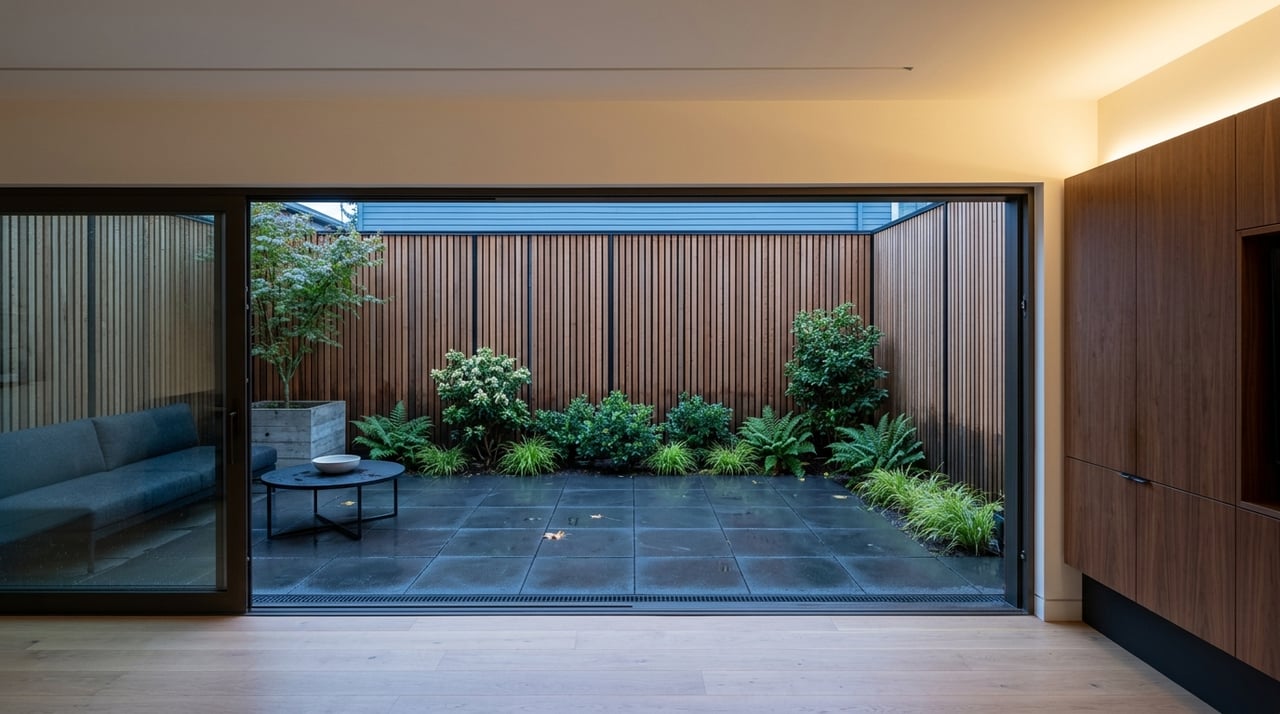
For Seattle infill, that points toward compact outdoor rooms rather than oversized, underdesigned exterior areas. Clean hardscape, low-maintenance planting, and a strong transition from interior living space to patio or deck can help a smaller footprint feel more premium.
The key is not size alone. It is whether the outdoor area feels intentional and connected to the home’s overall design.
Smart Tech and Energy Performance Are Baseline Features
Technology now reads as part of a luxury standard package, not a bonus item. Redfin’s luxury survey found smart-home technology was a common request for roughly four in ten luxury buyers, and energy-efficient appliances also stood out.
NAHB reporting adds useful detail here. Buyers rate programmable thermostats, security cameras, video doorbells, and wireless security systems as especially attractive because they improve efficiency and safety.
Build Around Comfort and Readiness
In Seattle, energy performance is not just a marketing angle. The Seattle Energy Code is designed to make new buildings, renovations, and equipment replacements efficient from the start.
Washington’s energy code also addresses EV charging infrastructure for new buildings and accessory structures, including parking lots and garages, with required mixes of EV charging stations, EV-ready spaces, and EV-capable spaces for many Group R occupancies.
That means luxury buyers may see energy and charging readiness as part of the expected baseline. If your home is missing those practical upgrades, it can feel behind the market even if the finish palette looks current.
Efficiency Supports the Luxury Story
ENERGY STAR guidance says certified new homes are at least 10% more energy efficient than homes built to code and average about 20% better performance. The newer NextGen certification goes further with increased energy efficiency, reduced on-site emissions, and EV charging capability.
For an urban luxury buyer, that translates into a simpler message: better comfort, better performance, and a more future-ready home. Those features support the premium story because they affect how the home lives every day.
Buyers Want a Smooth, Credible Sales Process
A well-designed home still needs a well-managed path to close. NAR’s 2025 Profile of Home Buyers and Sellers found that 88% of buyers purchased through a real estate agent or broker, and buyers most often wanted help finding the right home and negotiating terms.
That matters for builders because the product alone is rarely enough. Affluent buyers and their agents are evaluating responsiveness, clarity, documentation, finish schedules, and how confidently questions get answered.
Speed Matters, But So Does Confidence
The median home search took 10 weeks in NAR’s report, even in a fast-moving environment. Buyers may act quickly when they find the right home, but they often spend weeks comparing options before that moment.
Seattle’s own data supports that tension. Homes can sell in about 10 days, yet price cuts and concessions remain common enough that buyers notice when a listing starts to stale. A rushed launch or unclear positioning can cost momentum you may not get back.
Aftercare Builds Trust
For condo projects in Washington, RCW 64.35 provides minimum statutory warranty coverage of two years for materials and labor, five years for the building envelope, and 10 years for structural defects. Washington’s construction defect statute also requires written notice at least 45 days before filing an action, giving builders an opportunity to inspect and respond before litigation.
For buyers, that kind of framework reinforces the value of clarity after closing. For builders, it highlights why a credible warranty and service process can strengthen confidence during the sale, especially when the buyer is deciding between new construction options.
What Seattle Infill Builders Should Focus On
If you are building for Seattle’s urban luxury buyer, the winning formula is not mystery. It is disciplined execution across the areas buyers compare most closely.
Here are the priorities that stand out from the market data and buyer preference research:
- Price with precision. Strong demand does not eliminate buyer pushback when pricing gets ahead of product.
- Design for function. Efficient square footage, open flow, usable storage, and one real office matter more than oversized but awkward layouts.
- Invest in kitchens and baths. Buyers clearly prioritize islands, quality counters, double vanities, pantries, and strong appliance packages.
- Create intentional outdoor space. Smaller exterior areas can still feel luxurious when they are finished and connected well to the home.
- Treat energy and EV readiness as core features. In Seattle, they support both code alignment and buyer expectations.
- Deliver a polished sales experience. Clear communication, thoughtful positioning, and confidence after closing all shape perceived value.
For builders competing in Seattle infill, this is where experienced advisory and marketing support can make a meaningful difference. The right go-to-market plan helps buyers understand not just what the home is, but why it fits how they want to live.
If you are planning, pricing, or positioning a new luxury infill project in Greater Seattle, The Sessoms Group offers hands-on builder advisory, premium marketing, and concierge-level sales support designed for high-expectation buyers.
FAQs
What do Seattle luxury buyers want most in a new infill home?
- Seattle luxury buyers appear to value efficient layouts, one usable home office, strong kitchen and bath finishes, intentional outdoor space, smart-home features, energy efficiency, and EV readiness.
Are Seattle luxury buyers still making quick decisions in 2026?
- Yes, Seattle homes sold in about 10 days over the three months ending May 2026, but price drops and increased luxury inventory show buyers are also more selective.
How important is a home office to urban luxury buyers in Seattle?
- Research cited here shows many buyers who want an office prefer exactly one medium-sized office, around 100 to 150 square feet, which makes a dedicated workspace a meaningful feature.
Which finishes matter most to luxury buyers in Seattle-area new construction?
- Redfin’s luxury survey points to double vanities, kitchen islands, granite or quartz countertops, walk-in pantries, high-end appliances, and custom cabinets as top interior priorities.
Do Seattle infill homes need EV-ready features?
- In many cases, EV infrastructure is part of Washington code requirements for new buildings and accessory structures, and it also aligns with what many luxury buyers expect in a modern home.
Why are some Seattle luxury listings seeing price cuts or concessions?
- The research suggests that while demand remains strong, buyers have more choices now and are less likely to overlook weak design, inconsistent finishes, or pricing that feels too aggressive.