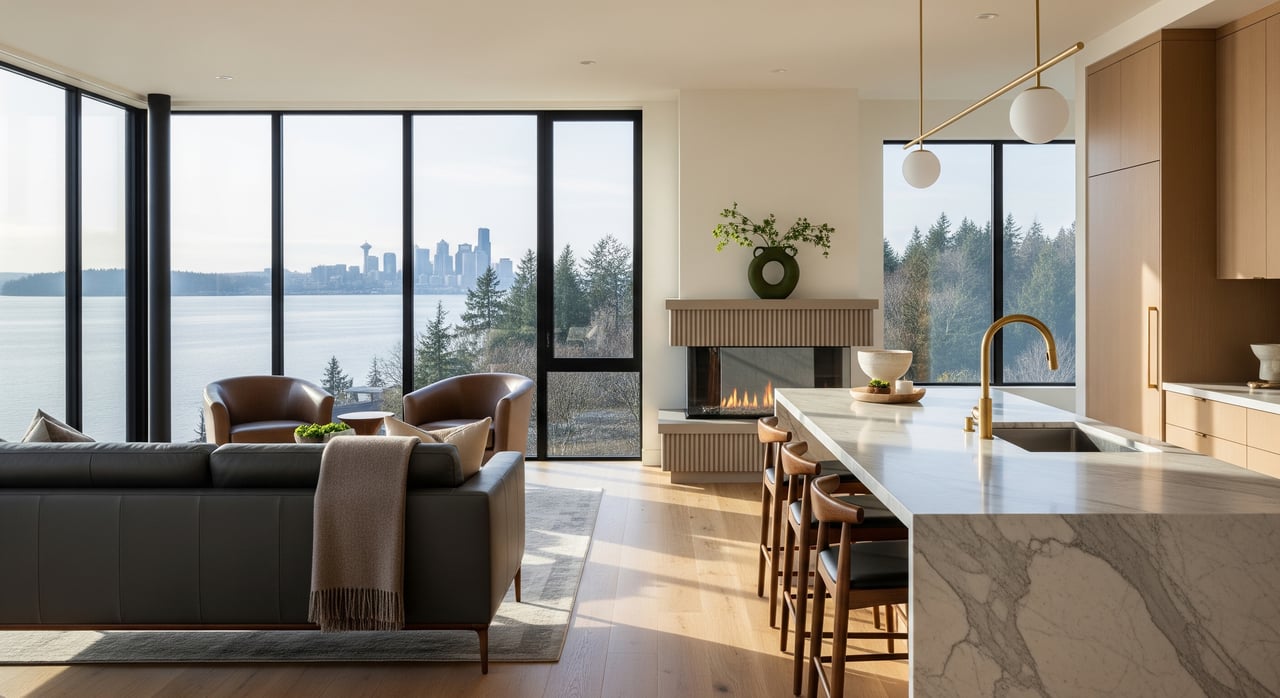
What if your next home offered more convenience with less upkeep, without giving up the finishes and privacy you value? If you are considering a rightsizing move in King County, you are not alone. Many luxury homeowners are exploring lower‑maintenance options while preserving comfort, equity, and access to top amenities. In this guide, you will learn how to plan your timing, prepare a high‑value listing, choose the right next home, and move with confidence. Let’s dive in.
Why downsize in King County
King County is one of the nation’s highest‑value markets, and demand varies by neighborhood. Prime, amenity‑rich areas often show more price resilience, especially where waterfront, views, or architect‑designed homes are involved. In the luxury segment, transactions are fewer and marketing windows can run longer, so the right strategy matters more.
Regional transit expansions have also shifted buyer interest. New and planned light‑rail connections have increased attention on areas with easy access to transit nodes. If you want urban convenience with a lock‑and‑leave lifestyle, proximity to transit can boost long‑term appeal.
Plan your timing
Your timing should reflect your life and your target property, not just the calendar. Consider the following:
- Seasonality: Spring brings more inventory and activity, yet luxury buyers shop year‑round. Align with personal milestones, tax planning, and the availability of your preferred condo or single‑level home.
- Interest rates: Rate moves change purchasing power. If you will buy and sell around the same time, map out financing options early.
- Inventory and demand: In low‑inventory pockets, selling first can strengthen your negotiating power. If the market favors buyers, build in extra time and contingencies to secure your next home.
- Personal readiness: Begin decluttering, documenting high‑value items, and coordinating estate planning well before you list. Rushed sales can erode value.
Prep your luxury listing
A thoughtful pre‑sale plan protects your equity and speeds the process.
Financial and legal readiness
- Engage a luxury listing agent early for a market valuation and a sellability checklist tailored to your neighborhood.
- Run a title review to uncover any encumbrances, easements, or permit questions, especially for waterfront or unique improvements.
- Consult a tax advisor on capital gains, cost basis documentation, Washington’s Real Estate Excise Tax, and any estate planning impacts.
Condition and strategic repairs
- Prioritize items that shape first impressions and pricing: roof, HVAC, plumbing, foundation, and any water intrusion.
- Consider a pre‑listing inspection to find and fix issues before buyers do.
- For selective improvements, invest where comparable sales support a return, such as kitchens, baths, lighting, and smart‑home systems.
Staging and presentation
- Professional staging designed for your likely buyer is often decisive. It showcases scale, flow, and lifestyle.
- Commission high‑end photography and video, including twilight images, drone footage for acreage or waterfront, and polished 3D tours.
- Market strategically through broker networks, curated private opens, and channels that reach executive and international buyers.
Pricing and offer strategy
- Decide whether to position at a premium with high‑touch marketing or at a market‑comparable price to encourage competition. Luxury pricing is bespoke.
- Prepare for non‑price terms that matter: flexible closing, rent‑back, confidentiality, and earnest money strength.
- Offer a robust disclosure and pre‑inspection package to reduce renegotiation risk.
Privacy and security
- Use secure showing protocols, discreet outreach, and limited public exposure when appropriate. Your agent should balance reach with confidentiality.
Choose your next home
Downsizing should elevate your daily experience. Focus on product type, services, and access.
Product types to consider
- Luxury condos and penthouses with concierge, fitness facilities, secure parking, and elevator access. Review the HOA’s financial health and assessment history.
- Single‑level luxury homes and cottages for privacy and ease of living. Add services if you want true low‑maintenance.
- Townhomes in gated or managed communities that provide a smaller footprint with premium finishes.
- Luxury senior communities if foreseeable care or services would simplify your lifestyle.
Must‑have attributes
- Low‑maintenance living with professional building and landscape services.
- Security features, privacy controls, and possible concierge support.
- Proximity to healthcare, culture, dining, and personal services.
- Accessibility features such as step‑free entries and elevator access, which also support resale value.
- Adequate parking and storage, including two secure parking spaces and dedicated storage for seasonal or hobby items.
Micro‑guides by area
- Bellevue: Downtown offers a strong luxury condo and penthouse market near parks, dining, and major employers. Turnkey buildings with concierge and fitness amenities are in demand.
- Mercer Island: A premium single‑family and waterfront market with easy access to Seattle and Bellevue. Downsizers often seek smaller waterfront condos or single‑level homes with dock access.
- Kirkland: Walkable waterfront living with restaurants and galleries. Newer luxury condos and townhomes, some with rooftops and modern amenities, appeal to those who want lake access with a suburban feel.
- Seattle neighborhoods: Downtown, First Hill, and Pike Place suit urban condo living near culture and transit. Queen Anne and Capitol Hill offer walkability with theater and dining. West Seattle provides a relaxed waterfront vibe, while Magnolia offers a village feel with larger single‑family pockets. For condos, pay close attention to building age, inventory, and seismic upgrades.
Condo and HOA checks
If a condo or managed community is on your list, complete thorough due diligence:
- Review HOA financials, reserve studies, meeting minutes, pending litigation, and any planned special assessments.
- Confirm building age and major system timelines, such as roof, elevator, and seismic retrofits for older buildings.
- Understand bylaws covering rental caps, pet policies, guest access, and any short‑term rental restrictions.
Taxes, costs, and financing
- Real Estate Excise Tax: Washington State imposes REET on property transfers, with county and local variations and progressive structures. Verify current rules with state and county resources.
- Closing costs: Expect broker commissions, escrow and title fees, prorated taxes, payoff of liens, and negotiated repairs. Luxury transactions may include attorney, trustee, or estate fees.
- Capital gains: If you meet IRS ownership and use tests, you may qualify for a primary residence exclusion, historically up to $250,000 for single filers or $500,000 for married filing jointly. Confirm current rules with your tax professional.
- Financing and timing: Bridge financing or a home equity line can help you buy before you sell. Consider rent‑backs, delayed closings, or all‑cash offers to secure a desirable property in competitive pockets.
Move logistics and valuables
- Hire luxury movers experienced with fine art, antiques, grand pianos, and specialty items. Verify insurance and packing credentials.
- Use a move manager to coordinate estate sales, donations, and storage. This is especially useful if you have extensive collections.
- Arrange climate‑controlled storage for items you will keep but not bring, and secure boat or vehicle storage if needed.
- Professionally appraise high‑value personal property and decide what to keep, sell, consign, or donate.
8‑step downsizing plan
- Define goals and constraints. Outline lifestyle needs, budget, timeline, healthcare access, and location priorities.
- Do financial and tax planning. Meet your CPA or wealth advisor to model net proceeds, taxes, and reinvestment options.
- Select a luxury listing agent. Choose a proven expert in your neighborhood and in your target areas.
- Prepare the home. Complete title review, pre‑inspection, strategic repairs, staging, and premium photography and video.
- Launch marketing. Leverage private broker events and luxury channels with targeted outreach.
- Set contract strategy. Determine contingency tolerance, closing windows, and preferred non‑price terms.
- Coordinate closing and move. Schedule specialty movers, set up storage, and handle utilities and high‑value item protection.
- Handle post‑move details. Update legal documents, property tax records, HOA onboarding, and local service providers.
Quick checklist
- Financial: recent valuation and comps, mortgage payoff, tax advisor consult.
- Legal: title and HOA docs, disclosures, will and trust review.
- Home prep: pre‑listing inspection, repair plan, staging, photography and video, exterior refresh.
- Marketing: agent selection, targeted buyer list, broker open schedule.
- Moving: mover estimates, transit insurance, storage options, estate sale or auction consult.
- Purchase: HOA and reserve study, building inspection, parking and storage allocation, pet rules.
- After move: healthcare providers, home services, and security monitoring.
How The Sessoms Group supports your move
You deserve a hands‑on plan that protects your time and equity. Our team pairs boutique, concierge‑level service with institutional‑grade marketing to deliver premium outcomes. We advise on product and pricing, coordinate pre‑sale prep, and produce cinematic marketing that reaches qualified luxury buyers. For your purchase, we focus on the right buildings and neighborhoods, reviewing HOA health, accessibility, parking, and storage so you can lock and leave with confidence.
Ready to map your next move with a clear plan and a trusted local partner? Connect with The Sessoms Group to schedule your concierge consultation.
FAQs
Should I sell my current home before I buy the downsized one in King County?
- In low‑inventory pockets, selling first can boost negotiating power, while buying first may require bridge financing or contingencies; build your plan around your risk tolerance and target property.
How much should I declutter or sell before listing a luxury home?
- Appraise high‑value items, create a keep list guided by space constraints in your next home, and use estate sale or consignment services for the rest.
Are luxury condos a safe choice in Bellevue, Seattle, or Kirkland?
- It depends on building financials, reserves, assessment history, and local demand; review HOA documents, reserve studies, and any litigation before committing.
What will my net proceeds be after taxes and fees when downsizing?
- Model net proceeds with your CPA, factoring REET, closing costs, and potential capital gains exclusion eligibility based on IRS rules.
How can I protect privacy when marketing a high‑profile property?
- Use confidential listings, private showings, strict showing protocols, and tailored outreach through vetted broker networks.
What extra inspections should I consider for luxury properties in King County?
- Beyond a general inspection, consider structural, roof, and mechanical specialists; for waterfront or hillside lots, add geotechnical and environmental reviews.