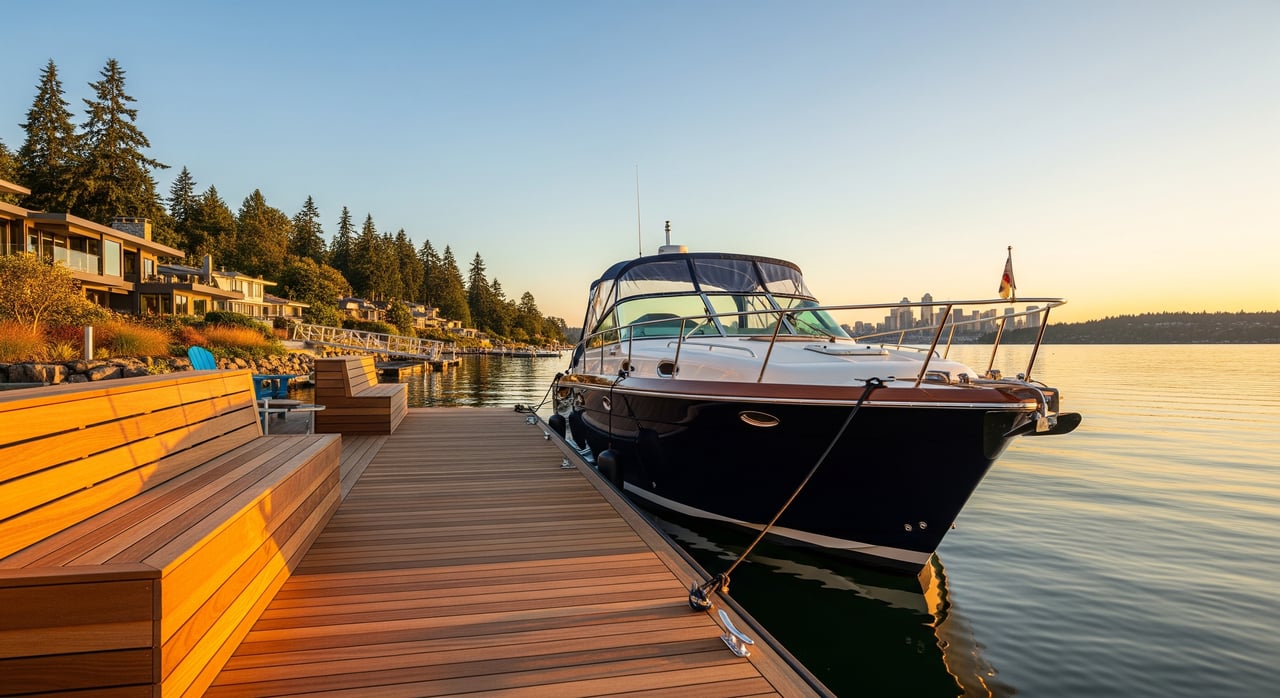
Picture this: a summer evening on Lake Washington, your boat tied safely at your own dock, family and friends gathered on the deck. If you are shopping or selling on Mercer Island, that picture comes with rules, permits, and a few important checkpoints. The good news is you can navigate it with confidence once you know how docks, moorage, and approvals actually work here. This guide breaks down what you can build or use, who regulates it, the steps to get permits, and the due diligence that protects your investment. Let’s dive in.
What counts as moorage on Mercer Island
Mercer Island waterfront living usually includes one of several moorage options. Each option comes with different rights and approval paths.
- Private residential docks. These can be pile-supported or floating, often with a boat lift or davit for storage.
- Boat lifts. Useful for out-of-water storage and maintenance. Often permitted alongside a dock.
- Shared or community docks. Common in some plats or HOAs. Rights depend on recorded easements and governing documents.
- Marina slips. Less common on Mercer Island’s residential shoreline but sometimes available off site for additional moorage.
Owning waterfront does not always equal automatic dock rights. Your recorded deed, any shoreline dedication, plats, covenants, or easements determine what you can do. If access crosses a neighbor’s property line, you typically need a recorded agreement.
Who regulates docks and moorage
Docks and shoreline structures are regulated at the city, state, and federal levels. Expect several agencies to be involved, depending on your scope.
- City of Mercer Island. The Shoreline Master Program sets size, location, materials, and slip-count standards. You may need a Shoreline Substantial Development Permit, a conditional use permit, a variance, and a building permit with structural review.
- Washington State. The Department of Fish and Wildlife issues Hydraulic Project Approvals for in-water work. The Department of Ecology coordinates Shoreline Management Act implementation and water quality reviews when federal permits are involved.
- Federal. The U.S. Army Corps of Engineers may require permits under Section 10 and Section 404 for docks, pilings, and dredging. If endangered species or critical habitat are implicated, federal consultations can affect timing and mitigation.
Permits you may need
Most projects waterward of the ordinary high water mark require permits. The exact mix depends on your design and site conditions.
City permits
- Shoreline Substantial Development Permit when your proposal meets project thresholds.
- Shoreline conditional use permit or variance when standards or uses require it.
- Building permit with engineering, electrical for lifts, and structural review.
- Critical areas review and potential SEPA checklist.
State and federal permits
- WDFW Hydraulic Project Approval for in-water work.
- USACE authorization under Section 10 or 404. Many residential docks may qualify under a general or nationwide permit. Larger or more complex projects often need an individual permit.
- Ecology 401 Water Quality Certification when a federal permit triggers water quality review.
Other approvals
- HOA approvals, CCRs, and easements as recorded for your property.
- Public notice and potential comment periods as part of shoreline permits.
Environmental factors that shape approvals
Shoreline rules are designed to protect fish habitat and aquatic vegetation. Design choices that reduce ecological impact are favored.
- Low-impact design. Floating docks where feasible, open-grate decking for light penetration, limited and smaller-diameter pilings, and low-profile designs help reduce shading and habitat effects.
- Habitat constraints. Forage fish spawning areas, eelgrass, and submerged vegetation can trigger additional protections and mitigation requirements.
- In-water timing windows. Many approvals limit construction to specific seasons to avoid fish spawning and migration. Your HPA and city conditions will specify allowed timing.
- Dredging and shore stabilization. Dredging is highly regulated and often requires studies and mitigation. Replacing hard bulkheads is closely reviewed. Soft-shore or bioengineering solutions may be encouraged.
Step-by-step permitting roadmap
A clear process minimizes surprises and keeps your timeline on track.
Pre-application due diligence
- Verify deeded rights, plats, recorded easements, and HOA rules.
- Contact City of Mercer Island shoreline staff early. Ask about a pre-application meeting.
- Order a site survey identifying property lines, the ordinary high water mark, and existing structures.
Design and technical prep
- Engage a marine or structural engineer with Lake Washington experience.
- Prepare drawings, materials specs, and mitigation plans that address shading and vegetation.
- If proposing dredging or major changes, commission habitat, sediment, or geotechnical studies as needed.
Permit submittals and coordination
- File city shoreline and building applications.
- Apply for your WDFW HPA.
- Determine USACE needs early and coordinate any Ecology 401 review if a federal permit is required.
- Plan for public notice periods and communicate with neighbors if your project may affect shared shoreline or views.
Construction and inspections
- Follow permit conditions exactly, especially work windows and construction methods.
- Schedule inspections with the city and state as required. Some projects require post-construction monitoring.
Post-construction care
- Maintain the structure per permit conditions. Avoid unapproved modifications.
- Share permit documents and any ongoing obligations with future buyers.
Buying or selling with a dock: due diligence
Waterfront transactions benefit from early, documented verification. A little homework upfront reduces risk and supports value.
- Confirm rights in writing. Review deeds, plats, easements, and HOA documents to verify moorage rights and any limits.
- Check permit history. Ask for approved plans and final inspections. Unpermitted work can trigger retroactive reviews or removal.
- Assess environmental constraints. Vegetation and habitat conditions can limit what changes are allowed later.
- Look for neighbor agreements. Shared docks or structures near property lines may rely on recorded easements.
- Plan disclosures. If you are selling, compile permits, approvals, and maintenance records to streamline buyer review.
Timelines, costs, and complexity
Simple repairs may resolve in weeks if they fall under exemptions or minor permits. New docks, replacements, or projects that involve multiple agencies can take several months or more than a year. Design, engineering, permit fees, mitigation, and construction all contribute to total cost. Complexity increases when you need federal permits, dredging approvals, or variances.
How we support your waterfront move
You deserve clear answers and a smooth process. With a concierge approach grounded in local expertise, you get:
- Pre-list and pre-offer diligence. We help you identify recorded rights, permit history, and likely approval paths before you make a decision.
- A coordinated team. We connect you with engineers, surveyors, shoreline consultants, and permit specialists experienced with Mercer Island and Lake Washington.
- Transaction clarity. We manage timelines, organize documents, and communicate next steps so you can focus on the big picture.
Ready to talk through your plans, whether you are buying, selling, or evaluating dock potential on Mercer Island? Reach out to The Sessoms Group to schedule your concierge consultation.
FAQs
Can I build a new dock on a Mercer Island lot without one?
- Possibly. Approval depends on city shoreline standards, your deeded rights and easements, and environmental constraints. Start with a pre-application conversation with the City of Mercer Island.
Do waterfront owners automatically have moorage rights on Lake Washington?
- Not always. Your deed, plat, and any recorded easements or HOA rules control moorage rights and limitations.
What permits are typically required for a residential dock?
- You will likely need city shoreline and building permits, a WDFW Hydraulic Project Approval, and possibly U.S. Army Corps and Ecology reviews depending on scope.
How do environmental factors affect dock design and approval?
- Habitat and vegetation drive design choices like open-grate decking, fewer pilings, and floating elements. Timing windows can limit when in-water work occurs.
Can I replace or repair an existing dock without a full permit?
- Minor maintenance may be allowed with fewer requirements, but like-for-like replacement or substantial repairs often still need permits. Confirm with the City and WDFW.
Are there limits on dock size or number of slips on Mercer Island?
- Yes. The city’s Shoreline Master Program sets dimensional limits and slip-count standards to manage environmental and navigation impacts.
What are the biggest red flags when buying a waterfront home with a dock?
- Unclear or missing moorage rights, unpermitted structures, strict habitat constraints, HOA restrictions, or active shoreline disputes can affect value and use.