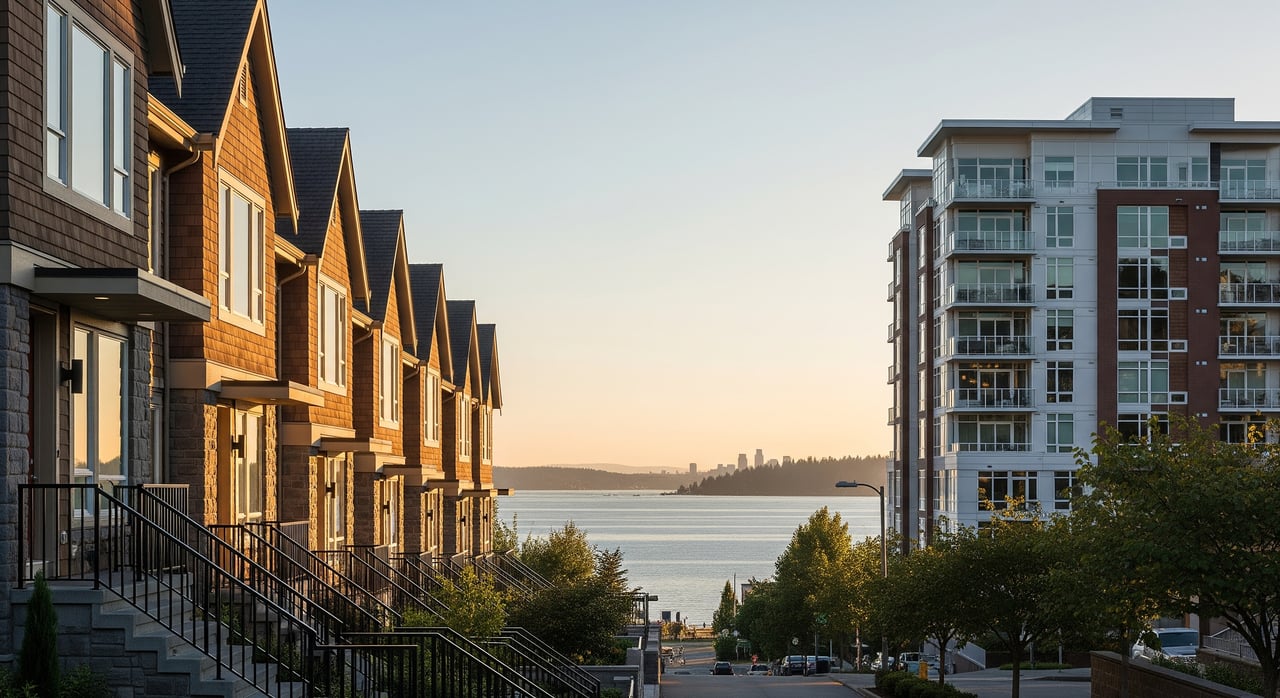
Trying to decide between a condo and a townhome in Kirkland? On paper they can look similar, yet the way you own, finance, and live in them can be very different. If you want low maintenance without sacrificing location, parking, or privacy, understanding those differences matters. In this guide, you’ll learn how ownership works in Washington, what lenders look for, how HOA fees and maintenance compare, and how each option fits life in downtown Kirkland, Totem Lake, and nearby neighborhoods. Let’s dive in.
Condos vs townhomes defined
A condo is a legal form of ownership. You own the interior of a unit plus a shared interest in common elements like the roof, hallways, and grounds. A condominium association governs the property using recorded declarations, bylaws, and CC&Rs under the Washington Condominium Act.
A townhome is a building style. It is typically an attached, multi-level home with a private entry and often a garage. In Kirkland, a townhome can be fee simple on its own lot or part of a condominium or planned community. Because structure varies, always confirm the legal setup and responsibilities in the recorded documents.
Washington ownership basics
- Condos follow state statute under the Washington Condominium Act. Your rights and duties are defined by the law and the condo’s recorded documents.
- Townhomes in Kirkland may be fee simple or part of a common-interest community. Exterior maintenance and land responsibility depend on the CC&Rs, not just the home’s appearance.
- Verify the legal description and governing documents through the King County Assessor and Recorder before you make assumptions about maintenance or insurance.
Financing and appraisal
Financing for condos often includes a project-level review. Lenders may request the association budget, insurance, reserve funding, owner-occupancy ratio, and any litigation history. FHA and VA loans can require project approval or additional criteria, which can add time or limit options.
Fee-simple townhomes usually underwrite like single-family homes. If the townhome is part of a condominium or similar association, the condo-style review can still apply. Ask your lender early about any project requirements and whether FHA or VA approval is needed.
Appraisers look at demand, location, and comparable sales. Townhomes can command higher prices when they offer a private garage, small yard, or separate lot ownership. Condos near downtown Kirkland, transit, or the waterfront can be in strong demand and often price competitively on a per-square-foot basis.
HOA, dues, and reserves
The scope of an HOA drives your monthly dues and your responsibilities. Focus on what is covered, the health of reserves, and the association’s rules.
Maintenance responsibility
- Condos: The association typically handles exterior maintenance, roof, building envelope, landscaping, and common utilities. You maintain your unit interior.
- Townhomes: It depends on the legal structure. Some communities maintain exteriors and shared spaces. Fee-simple townhomes often require owners to handle exterior elements and yards. Confirm responsibilities in the CC&Rs.
Insurance basics
- Condos: The HOA carries a master policy for the building and common areas. You carry an HO-6 policy for interior finishes, personal property, liability, and loss assessment where applicable.
- Townhomes: Insurance varies by structure. Fee-simple townhomes may need an HO-3 style policy for the dwelling and lot. If the townhome is in a condo or similar community, you may still need an HO-6 for interior coverage. Review the master policy and owner obligations.
Rules and restrictions
Rental caps, pet rules, parking assignments, short-term rental policies, and remodel guidelines live in the CC&Rs and bylaws. These rules affect how you use the home and your resale options. Read them closely before you commit.
Lifestyle in Kirkland
Downtown Kirkland offers walkable access to restaurants, shops, and waterfront parks. You will see a higher concentration of condos in these urban blocks, with shared corridors and possible elevator access. Parking can be assigned underground, shared on the surface, or limited in some buildings.
Townhomes are more common in infill areas such as parts of Totem Lake and Northeast Kirkland. Many offer attached garages, direct entries, and sometimes small outdoor spaces. If you value a house-like feel without the upkeep of a detached home, a townhome can be a strong fit.
Commuting along I-405 and SR 520 is a key factor for many buyers. Proximity to transit and employment centers in Bellevue, Redmond, and Seattle may guide whether you prioritize parking and storage or walkability and amenities. Juanita, Totem Lake, and downtown each balance these trade-offs differently.
Taxes and assessments
Property taxes reflect assessed value regardless of property type. Condo assessments are based on the unit and any apportioned interest in common elements. Fee-simple townhomes are assessed like single-family parcels. Special assessments set by the HOA can materially affect your monthly costs. Ask about past, current, and planned assessments before you finalize an offer.
Buyer checklist
- Confirm the legal ownership type on the deed and listing. Is it a condo unit plan or a fee-simple parcel?
- Review HOA documents: CC&Rs, bylaws, rules, current budget, latest financials, reserve study, meeting minutes, insurance certificates, litigation disclosures, delinquency list, and any assessment history.
- Ask your lender about financing caveats. Is the project FHA or VA approved? What are investor ratios and reserve requirements?
- Clarify what monthly dues cover, including utilities, exterior maintenance, parking, and amenities.
- Verify parking location, storage availability, and whether utilities are separately metered.
- Confirm rental and pet restrictions if those uses are important to you.
- Request a history of special assessments and owner delinquencies.
- Inspect common elements where possible, including roof, siding, elevators, and garage conditions.
- Review recent comparable sales for condos and townhomes in the same Kirkland submarket.
- Check commute times and consult the Lake Washington School District for boundary details.
Seller checklist
- Assemble the required resale package early and confirm any HOA fees and timelines for document delivery.
- Disclose known HOA issues, including litigation and special assessments.
- Tailor marketing to likely buyers. Condos often attract urban-focused buyers or investors. Townhomes often appeal to those seeking house-like features and a garage.
- List all inclusions clearly, such as parking stalls and storage units.
- Coordinate showings with association rules and highlight privacy, parking, and storage in photos and copy.
Local resources
- Northwest Multiple Listing Service for current inventory and comparable sales.
- King County Assessor and Recorder for deeds, parcels, tax history, and legal descriptions.
- City of Kirkland Planning and Building for zoning, maps, and permitting.
- FHA and VA resources for condo project approval guidance.
- Fannie Mae and Freddie Mac condo project eligibility guidelines.
- Lake Washington School District for boundary maps.
- Local lenders, title, and escrow for financing overlays and resale package requirements.
Choosing your fit
If low maintenance and walkability are top of mind, a Kirkland condo near downtown or the waterfront may serve you well. If you want a garage, private entry, and a house-like feel without the commitment of a detached home, a townhome in Totem Lake or nearby neighborhoods could be the better match. In both cases, the details live in the documents and the financing.
The smartest next steps are simple. Confirm the legal structure, review the HOA’s financials and rules, and talk to your lender early about project approvals. When you are ready to compare specific buildings and communities, we can help you weigh the trade-offs and move with confidence.
Ready to find the right fit in Kirkland? Schedule your concierge consultation with The Sessoms Group.
FAQs
What is the core difference between condos and townhomes in Washington?
- A condo is a legal ownership type with shared common elements, while a townhome is a building style that can be fee simple or part of a condo or planned community.
Is financing a Kirkland townhome easier than a condo?
- Often yes for fee-simple townhomes, which underwrite like single-family homes. Condos may require project approval and more documentation, especially for FHA or VA loans.
Who handles exterior repairs for each option?
- Condo associations typically handle exteriors and common areas. Townhome responsibilities vary by CC&Rs. Fee-simple owners often handle their own exteriors.
How do HOA dues usually compare in Kirkland?
- Condo dues are often higher when they include exterior maintenance, building insurance, and amenities. Townhome dues vary based on what the HOA covers.
Are condos riskier for investors in Kirkland?
- Condos can be more sensitive to project-level factors like reserves, litigation, and rental caps. Thorough review of the association reduces many risks.
Which Kirkland neighborhoods favor each option?
- Downtown Kirkland tends to have more condos with strong walkability. Many townhomes are found in infill areas such as Totem Lake and parts of Northeast Kirkland.